Hot Time, Summer in the City

Something I’ve observed this summer, worse than ever before, is that tourists are invading every corner of the city, making demands, being cranky, expecting to find Valhalla and finding instead the tricked out, dark underbelly of Oz.  They have bought into the Disney image of New York that Mayor Bloomberg and his 1%-ers have hyped to the hilt, and they blame New Yorkers for the fact that in real life, this city is still a dirty, noisy, hot, muggy, polluted, poorly air-conditioned and ridiculously expensive cesspool.

Don’t get me wrong.  I love New York.  I have never wanted to live anywhere else.  But when I am solvent enough to leave the city every summer, I shall.  Where will I go?  Anywhere but here.

Summer temperatures top 1000 at least in heat index for much of the summer.  While weather idiots on the tube regularly crow about the gloriously hot summer temps, they are safely ensconced in studios with average temperatures of 700F or lower, knowing they are about to get into hyper-cooled town cars that will whisk them back to whatever well A/C’d suburban lushness they left this morning. The rest of us are pouring schvitz, and no building we find ourselves stuck in is adequately cooled.

For most of us in New York — both native and visitor — there is no place to go for real relief.  The tourist who paid exorbitant prices to get here is not going to leave the city for a weekend spent floating in a not-nearly-as-icy-as-it-used-to-be glacial lake in the Adirondacks, which might be the only place left in the Northeast that isn’t miserable.  That tourist is probably wishing s/he had considered Alaska for this summer vacation.  Whatever possessed her to come here?

New Yorkers — well, those of us stuck down her here on the ground for the summer; remember, the 1% are out of town or in their refrigerated towers where weather is irrelevant — take the blame.  The tourists scream at us, push us out of their way, scowl at us when we try to help them.  And the way they treat service industry workers is appalling.

Last week, in a moment of exaggerated irony, I heard a woman yell at her husband, “Stop that.  You sound like a New Yorker.”  He was in mid-rant, flinging filthy epithets at a tour guide whose bus was full and could not take the couple onto her bus.  I was standing close by, a witness to the whole episode.  “I’m sorry for your trouble,” the guide had said consolingly.  “I’ve called the dispatcher to send an empty bus. You are not alone — we have . . .”  “You f-ing liar,” growled the man as the guide ran back onto the bus, pleading for the driver to close the doors behind her because the man was clearly about to lunge.  “You’ve made me stand here for two f-ing hours, you stupid bitch.  You think I believe for one minute that you got off your fat ass to. . .” The tour guide said less than nothing; she did look like she was close to tears.  If this guy was any example of the kind of customers she’d been taking on all day, she was probably frazzled.  And broke because no one was tipping.

Most Americans  — and foreigners these days, for that matter — turn their noses up at tipping, and many foreigners simply don’t understand our system because where they come from, tips are included in the price they pay for everything; no one ever has to ask.  Most tourists view service industry people’s asking for tips as akin to panhandling.  Yet the tip seekers are hard working, critical members of the labor force.  Nothing would run without them.  Yet their greedy, megalomaniacal bosses don’t pay them what they are worth;  they expect you to do it for them.

Consider the same tour bus, for example.  You have paid what feels to you like a king’s ransom for the pleasure of sitting on a steaming solarium, getting stuck in traffic long enough to have your skin sun roasted to the color of polished pomegranate seeds.  But in truth, you have actually paid very little for the service you are receiving.  Think about it.  On every bus, there is a driver and a guide who will answer all your questions, take all your abuse.  At every stop there is a dispatcher who keeps the buses rolling and protects you from one another when you fight over who’s first in line.  In the offices there are accountants who count and account for the money and bosses who tell each of the underlings what to do at every moment.  You use this service as a taxi, and in a day’s time, your handful of money has paid for some 500 people to keep the rig running.

Do you honestly believe those 500 people are paid what they are worth?  How could the employers’ profits soar as they do — these are figures Mayor Bloomberg loves to crow over — if all those foot soldiers were substantially paid?

Out-of-towners look down on service industry workers, consider them beneath contempt. They are, after all, the working class and deserve to be underpaid, undervalued, overworked, and maltreated because they didn’t pay their dues, get a good education, work their way up the corporate ladder.  In this age of Romney-ite philosophy, if you’re not rich, you are a loser.

Boy are you in the wrong city for that attitude!  I’m sure it’s like this elsewhere, but in New York, a surprising  — no, an ASTOUNDING — percentage of those working blue collar jobs are well-educated, well-read millions who were traind for jobs in industries that have failed in the past two years . . . like publishing and its fellows.

And here’s another insight.  Maybe where you come from your bosses talk to you like you deserve to be treated like a human being.  But in New York, particularly in the tourism industry, thugs are in key management positions.  That same tour guide who was being upbraided mercilessly by the unhappy customer will go back to her post and take another verbal beating for some infraction she executed unawares, and when she gets her paycheck, chances are it will be short by at least five of her exhausting hours’ work.

So, what’s my point? 

I hope you do come to New York — come soon, and come often.  We need your dollars for sure.  But try to remember that you need the service industry workers at least as much as they need you.  They go out of their way to make sure you are having a great day; they answer your questions, make lists, point to landmarks to guide you on your way, recommend places to pee, protect you from as much of the unpleasantness as is humanly possible.  They bring you your food, valet your car, carry your over-stuffed suitcase, call your cabs, drive your transports, clean the washrooms (yes, they do — people are slobs, remember?), ensure that you get safely to whatever floor you seek and, well, there is little you don’t take for granted that doesn’t require your thanking a service person.

Treat all New Yorkers with kindness and respect.  But treat all your servers with some extra consideration.  Leave a tip.

And for goodness sake, try to have a great time.  That’s what you came here for.
Illuminating the Borders of Time

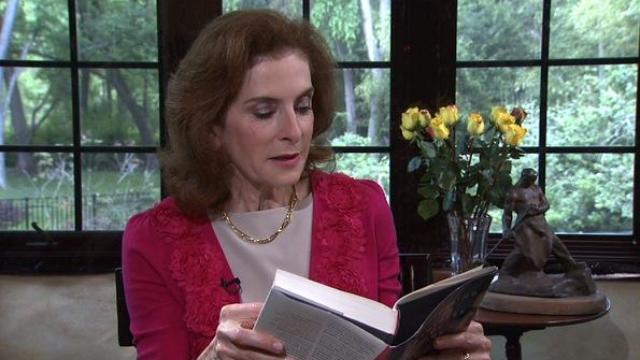
Leslie Maitland, author, Crossing the Borders of Time

In my earliest memory of a life-long recurring dream, I am not yet 5, sleeping at my grandmother’s sharply-gabled, faux-Tudor house in Bayside, Queens, in a room that I keep reminding myself doesn’t really exist, under a sharply pointed roof.  I hear sirens outside, growing louder, finally screaming just beneath my window, and I am terrified.  I wrap myself in a blanket and roll under the bed, listening to the murmur of unfamiliar, angry voices, and then I hear my grandmother bark, in cigarette-induced contralto, an angry recitative, “You don’t belong here.”  A gruff male voice, thinly tenor, replies, “You are wrong.  We may have missed you the last time, but this time we will get you. You cannot escape again.”  Grandma’s screams are garbled, but I clearly hear “Run, children,” in German, and I begin frantically scurrying about the house, urging family members, to come with me.  But they won’t move.  I am weeping, pleading, and I am suddenly paralyzed.  I want to run but cannot.  I am immobilized and terrified, and then I wake up.

Those of us who grew up in the wake of the German terror in Europe lived tenuously in our parents’ new world, and we shared with them the displacements that came with them in their flight.  Their nightmares and pain became ours, their loss left us feeling cheated.

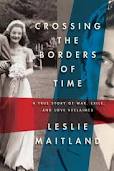
Unlike many of the survivors who became our parents, Leslie Maitland’s mother Hanna/Janine Günzburger, whose story is the subject of Maitland’s remarkable book Crossing the Borders of Time, was generous with her memories. Maitland grew up ingesting details of her mother’s life in Europe, the joys and the agonies that accompanied a childhood punctuated by frequent flights.  As German-speaking residents of Alsace and Lorrain, they fled amid shifting, enmity-defined borders, eventually forced out of Europe altogether, finding their way to the United States by way of a three-year sojourn in Cuba.

Maitland chronicles the exhilarating moments of her mother’s delicious, feisty youth and first love as well as the disappointments, the upheavals, the ultimate devastation of losing everything.  And in the wreckage, lay communication with Roland, the love of Janine’s life, the man she pledged to adore and promised to find when all the tumult subsided. He had vanished from her reach, and so began a lifetime of regretful longing for what might have been.

As her father lies dying, Maitland, a brilliant, seasoned, journalist, sets out on a journey to reconnect her mother to the man she loved first and loved best, and the quest to reunite the lovers embodies the universal pursuit of serenity that is the consequence of survival we all shared with and inherited from our parents.  Her pilgrimage is illuminating,

It’s easy, especially for the children of these survivors who were born into an America of plenty and of relative tolerance, to overlook the aftermath of the survivor’s experience and forget that the great miracle of their having made it through disaster is only the first small step in a struggle for contentment.  Having endured a tragedy and lived to tell the tale may be cause for gratitude, but it is also cause for years of self-reproach and self-doubt, of choices ruled by circumstances forged in the fires of hell.    Survivors’ guilt is a deep, multi-layered cloak they all bore without relief, and we rarely have the opportunity to examine its carefully-woven threads.

What makes Maitland’s book so affective is the fact that she tells it with no manipulations.  The emotion comes from the action, from the characters — her real-life antecedants — themselves, and it is honestly reported, forthrightly delivered.  There is no whine of self-pity for any of her various subjects, only a persistent will to live on and to find happiness, whatever that may have been.  In their desire for joy, the people in this book overcome multitudinous obstacles, but they never stop to question whether satisfaction is worth having.  They keep on keeping on, and in that they are heroic.

There are few books about the time period called The Holocaust that so effectively describe life in the shadow of  Hitler and the Nazis.  And part of Maitland’s effectiveness comes from the emotional restraint she exerts over every page.  Like Thomas Keneally in Schindler’s List, Maitland writes with unwavering objectivity, even when speaking of personal and deeply felt family history.

Which gives the story a power and a glory all its own.

Munich Matters

When Dan Alon approached me to write the harrowing tale of his freakishly miraculous escape from the Munich Massacre, I was drawn to the tale for its depiction of the process of survival.  I had grown up in a family of traumatized escapees from disaster and holocaust, and none of them ever found the vehicle that could deliver them from their ghosts.  I was honored to offer my services to help build the transport for Dan’s journey.

At the time, I thought that my agenda would include an expression of compassion for the Palestinians.  I was emotionally conflicted about Israel.  While I understood the extreme importance of a Jewish homeland, I agreed with a close friend of mine, who used to joke that “They could ‘a’ just given us Miami.”

Frankly, Israel embarrassed me.  My grandfather had coerced my mother into abandoning her dream of making Aliyah (moving to Palestine) in 1939, and he often compared Zionists to all the other Europeans who had grabbed land from indigenous peoples around the world.  I believed that Israel should be forced to give back lands confiscated in the 1967 War, that Israel should take a more conciliatory stance.

 My point of view clouded my perception of the Munich Massacre.  Of course I never would have blamed the athletes for what happened, but I believed, like most Americans, that by disenfranchising the Palestinians and by discriminating against them, Israel was to blame by putting the athletes in harm’s way.

I was committed to sharing Dan’s as a cautionary tale — watch out, world because this could happen again, and watch out, individuals, you could survive, and then you will realize that living through the ordeal was the easy part of it all.  But I hadn’t considered the event’s other, more layered, implications.

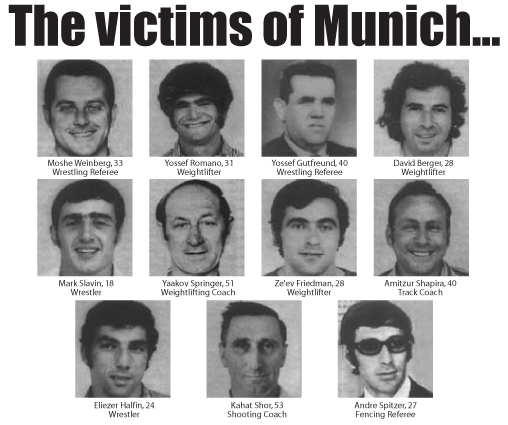
That there is no excuse for what happened in Munich is self-evident.  A vile act of terrorism that usurped the sanctity of the Olympic arena and took eleven fathers, brothers, husbands, sons, nephews, cousins, friends from their loved ones cannot be justified or excused.  The athletes were non-combatants, and their deaths were pointless wastes of fine lives.

Eleven athletes killed at Furstenfeldbruck Airport on September 5,1972

The world clambered to give the terrorists the attention they sought.  The masked murderers of Black September became fixtures on nearly every television set in the world, and when all was said and done, they were hardly so much as chastised.  Until Mossad unleashed Operation Wrath of God, no real action was taken to so much as censure the perpetrators of the heinous violence; the Olympic Games themselves refused to skip a beat, carrying on as though nothing were amiss while half the hostages were strapped into helicopter seats and strafed with machine gun fire and the other half obliterated with an exploding grenade.

 The message was clear.  We may say the Olympics are on sacred ground.  We may pay lip service to the precept that the Games are separate from the world of politics, but Israeli journalist Yarin Kimor was right when he pointed out that “The minute you raise a flag, it’s all about politics.”  It was politically safer, more expedient for the IOC and world law enforcement agencies to just let this one go.  It was too highly charged an issue.  Take sides, and you rock the boat.  Instead, eleven athletes were sacrificed.  Nothing was really gained by the terrorists; the following year, perhaps spurred on by the Munich tragedy, the world — including the US, who had promised to defend its ally Israel — watched in silent complicity as Egypt and Syria attacked Israel on the highest, holiest day of their year. . . just as they had stood silently by in the 1930’s, when everyone knew what the Nazis were perpetrating against the Jewish people.  Once again, the nations of the world stood by in hushed complacency and did nothing to lend a hand.  In the peace negotiations that followed, however, the US took the role of “peacemaker” and threatened sanctions should the Israelis prove less than propitiatory.

The world seems to believe that Israel is expendable.  Few seem to remember that less than 3/4 of a century ago, six million Jews died because they were unwelcome in the diaspora.  There was no safe haven then.  Even France, the country that first afforded citizenship to the wandering Jew, turned them out or fed them to the ruthless Nazi killing machinery; the US, my own beloved country where so many believe Jews to be firmly ensconced, denied entry to millions, despite the absolute knowledge that such denial meant certain torture and death to the shunned minions.

And there was no safe haven for the others who fell, like domino pieces, when no force prevented forfeiture of the Jews.  Hatred swallowed up great numbers of Poles, gypsies, unmarried professional women, gays, physically and mentally challenged citizens, Catholic priests, et cetera ad infinitum.

Where will they all go the next time they are so endangered?
 Forty years after Munich, the IOC continues to give tacit approval to the terror they allowed to happen.  Yet another Olympic Games will begin without the simple Moment of Silence the victims’ families have consistently sought.  The Arab nations call for the expulsion of Israel from the Games, and the IOC gives the same attention to that demand as they do to the request for the single minute of remembrance, a minute that says without words, “We are truly sorry.  What happened here was despicable, and we will never let another athlete on any team be treated this way under our watch again.”

Worse, the world looks on bemusedly when Australian swimmers post photos of themselves going to the Olympics carrying, of all things, machine guns.  Perhaps they are harmless idiots, these Aussies, but the message of the photo’s reception is that it’s okay to treat the massacre’s remaining family and friends as well as the athlete survivors with abject insensitivity.  The world shook its head and tsikatched at the boys, but there was no statement from the IOC that what they had done was intolerable, that no such behavior would be conscienced.

Munich Memoir: Dan Alon’s Untold Story of Survival is a first hand account of what it was like to be at the games when his friends, teammates, countrymen were taken and slain.  It reminds us how easily a tragedy can happen in a garden of peace and love.  It reminds us that we are all vulnerable, all candidates to stand one day as Dan did, in shoeless, shocked disbelief while people we care about are simply erased by others with a savage agenda.

It reminds us that we cannot ignore history.  It will not go away.  Let it be our teacher!

Skeptical Idealism

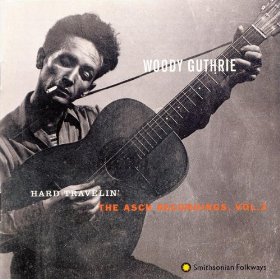
I once was a union maid. Singing along with my soul father Pete Seeger, I turned 13 in a world where the unions, which had little to do with my life, existed to make workers feel appreciated, keep their bellies full and protect their rights. I would have followed “Dad”  and Uncle Woody to the ends of the earth carrying placards, recruiting for the unions.

Practical experience, however, has taught me skepticism.

In 1988, I went to work as a teacher in the state of CT, rejoicing that unlike AZ, where I had earned my certification and where no unions represented teachers, CT offered membership in a local chapter of the National Education Association.  I served on the bargaining committee and was part of a team that won my district some important concessions.  Then, after twelve years of fighting the politics of bureaucracy vs the arts, after feeling castigated for my perceived iconoclasm, I decided it was time to leave the profession.

Had I been a true devotee of my union, I would have stayed on indefinitely.  I had tenure.  I didn’t have to fight, didn’t even have to work very hard anymore.  My contract, buoyed by my Union membership, would have allowed me to get away with almost anything short of criminal behavior without being fired.  I could have followed in the footsteps of so many teachers who had gone before me, sleeping through classes, disengaging further and further from education, sitting for hours in the teachers’ lounge complaining about my lot but doing nothing to change things,  safely and securely ensconced in my job.

Instead, I saw that I was becoming ineffective.  I was distracted by personal traumas and exhausted from the constant round of fundraising and fighting for auditorium time that constituted much of my life.  I couldn’t focus on the student writing I was supposed to be coaching, and I feared allowing my negativity to rub off on the kids.  Nothing is worse for education that an ineffectual teacher, so I left.

And that’s when I found out just what the union had really done for me.

Long before my time, in the 1950’s, the Connecticut Teachers Retirement System voted to opt out of Social Security, and in 1959, at the request of the Connecticut Education Association, the General Assembly of the State of Connecticut prohibited members of the Retirement System from holding any further referenda on the matter.  To this day, the ban on Social Security for teachers in the state of Connecticut remains in place.

Which works out great for those teachers who stay  – even those who stay too long — from youth to age.  Had I been able to max out with 37 years in the system, I could have had a pension that exceeded my working income, and I would have had lifelong healthcare benefits.  But I began teaching at 50; I was hardly going to make it to the end any way I sliced it.  Today, at 65, my social security looks like I didn’t work for twelve years, and I have no pension.  The union did a great job for the one group and totally screwed the others.

Basically, the union made it possible for me to keep my job forever.  But it failed to protect any alternatives to the ties that bound me to the system, as it failed to allow the system to realistically assess my worth.

No union can make a perfect system.  None should promise to do so.  The union I am affiliated with now made promises, got commitments from management but the enforcement of all the concessions is a huge task, and in our case, implementation forced whole segments of the work force to compromise their well-being and/or to sacrifice their jobs altogether.  For the most part, the union shakes a hefty stick and makes noise but falls short real advocacy.  Yesterday the union actually gave credence to a management censure of a colleague who is dressed too well.  He breaks no rules, he comports himself professionally, and he even wears the required uniform.  Yet the union allowed his time and theirs to be wasted over nonsense.

There is no panacea.  No union can promise universal satisfaction any more than any politician can.  I don’t blame the unions.  I blame myself.  I expect too much.  Employers will exploit workers every chance they get, and workers will take advantage of any opportunity to bilk the employer.  It’s the way of the world.  Why do I keep hoping there is any protection from it?

Oh well.  It don’t scare me.  I’m sticking to the union . . . but I’m also lookin’ out for numbah one.  Know w’ad I mean?

Catch a Flying Star.

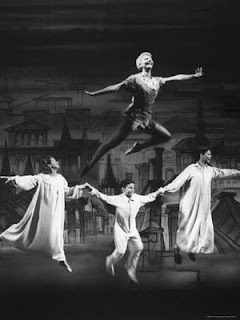
Mary Martin as Peter Pan with Wendy (Kathleen Nolan), Michael (Joseph Stafford) and John (Robert Harrington), 1954

I was 7 when my mother took me to a friend’s house to watch the first telecast of Peter Pan starring Mary Martin.  While I loved Peter, I saw myself in Wendy(Kathleen Nolan), my more accomplished self, stuck in responsibilities, too pragmatic and obedient to just crow.  Jumping up and down with excitement, I watched her take off on her first flight, and I think that was the first time I remember crying for joy.  Wendy was saved.  No matter what, she’d never again be trapped in that holding pattern where a young lady is not allowed to be a child but isn’t yet respected as an adult.  From now on, when adults yelled at her, Wendy could escape, return to the joyous memory of flying.

Which made me wonder about Wendy’s mother.  Would she, like my mother, be impatient with the frivolity of childhood?  When Wendy was in her room writing about Peter, would her mother shame her into emerging from her cocoon to look after siblings?  Would Wendy’s mother be angry when Wendy slept too late after a night of fantasy-induced insomnia?  I concluded that Wendy’s mother must be far too enlightened for any of that.  No doubt, Wendy’s mom had had a spectacular childhood, and, as a result, took pleasure from her daughter’s fancies.  In short, Wendy’s mother was my ideal mom.  Every year, I’d watch Mary Martin fly away, leaving Wendy and Nana, and I wasn’t the least bit sad.  Because I just knew that Wendy was happily where she belonged.

How gratifying that Rick Elice has envisioned the perfect childhood for my imaginary mother.  His Molly (Celia Keenan-Bolger), the heroine of Peter and the Star Catcher, who will be Wendy’s mother someday, is strong and brave and smart and competitive and obnoxiously self-assured; she leads the boys into their life of perpetual childhood, a life she has even designed for them.  She facilitates Peter’s epiphany that allows him to meet himself and laughs in the face of Captain Black Stache (Christian Borle) as she thwarts his evil and sets him up as the favorite prey for the omnipresent croc.  In short, Wendy’s mother Molly is exactly the kind of girl I wanted to believe my mother should have been because she was who I wished I were.

Boy (Adam Chanler-Berat) and Molly (Celia Keenan-Bolger)

Wendy isn’t the kind of girl who’ll grow up to be a man-hating feminist.  Nor will she ever want to be one of the guys.  She is proud of her femininity and then reveals that she is also unafraid to be soft and vulnerable. Celia Keenan-Bolger captures her brilliantly, her perfect voice and demeanor cloaking the girl (or is she really older than we think?) in vari-colored nuances that make her starkly real while still a figment of our collective imagination.

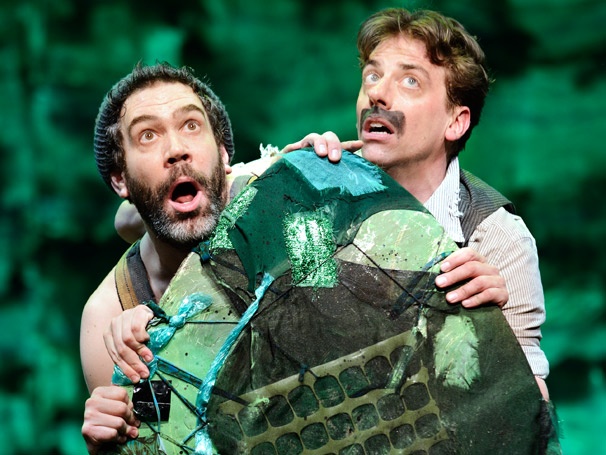
Smee (Kevin Del Aguila) and Stache (Christian Borle)

 Wendy is not alone onstage.  She is surrounded by a brilliant company, swinging from role to role never dropping even a shadow of the thread.  Christian Borle could not be more enchanting as the company man and the dastardly Captain Stache. He chews up the scenery in a frolicking frenzy of masterful comic acting and then, to prove his true command of the craft, he revels in a line that pokes fun at himself for doing so — vowing that no croc is going to devour scenery while he’s onstage!

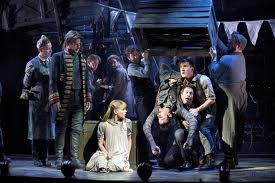
Peter and the Star Catcher Company

There’s no one who’s not terrific here.  Adam Chanler-Berat as Boy, Arnie Burton as Mrs. Bumbrake, and  Kevin Del Aguila as Smee may seem salient, but the whole ensemble deserves equal credit for bringing this romp to full-boar life.

 Peter and the Star Catcher misses not one single beat in this production, now playing at the Brooks Atkinson Theater (http://peterandthestarcatcher.com).  Directors Roger Rees and Alex Timbers have found just the right pace, exactly the best staging, have chosen precisely the best creative team, and there isn’t so much as a single hiccup of error.

Which brings it all back to Rick Elice.  The best character in this play is The Play itself.  Pure theatrics at their most basically theatrical.  No pyrotechnics, no high gloss effects, jut flawless actors capable of endowing pieces of string with more life than a wilderness of monkeys.  Peppered with allusions to everything you’ve ever seen (or read) and loved before but rife with originality, this is a play that asks the audience to play along, to suspend disbelief in the suspension of disbelief and then gently forces us to believe long before Peter asks us to clap and prove it.

In the end, empowered by our own delight, we leave theater knowing that the vagaries of our lives and its multiple responsibilities will hereafter be mitigated by this memory of flying.