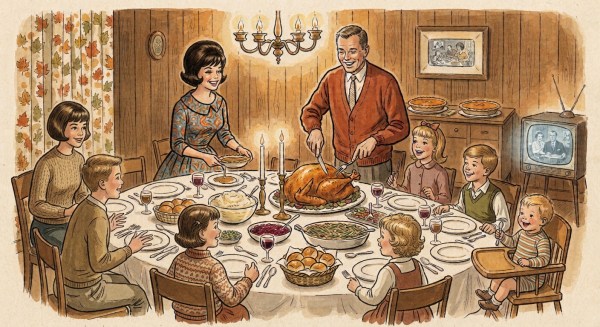
Thanksgiving Shorts

a few beloved memories of an American holiday. . .
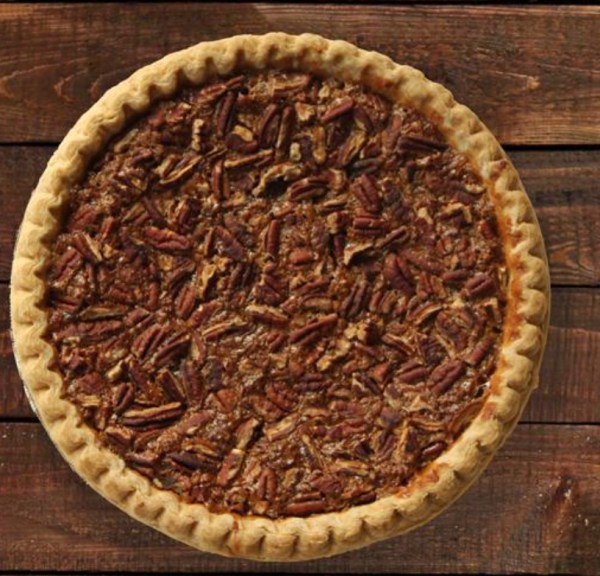
The first pie I learned to make was a Pecan Pie, and I must say it was the one kind of pie I loved as much as my daddy did.

I. Daddy’s Day

Thanksgiving was my father’s favorite holiday.  He could relax, eat his fill, burp, fart to his stomach’s delight, and eat some more.  There was no after-holiday over-spending remorse, no compulsion to go to church or visit with clients.  Thanksgiving was a day for his family and pecan pie.

Dad hated turkey, the effect of a post traumatic stress suffered after he was forced by foxes and disease to mass execute a frenzied brood of hens when I was 6.  No one thought of the bird as the highlight of the meal, though everyone else ate bird, sides, and gravy with great gusto. The real center of attention was always the pecan pie. Dad could eat the whole thing in one go, but he’d make sure there was at least a bit left for the next day.

He loved the sweet gooey confection, smacked his lips after each bite, and when he was through, he always told the story of his Uncle Alfred.

“My Uncle Alfred,” he’d begin.“ The man I’m named for. That man loved Thanksgiving. And most of all he loved his pecan pie!! Every year, he’d eat his meal, turn down seconds of this or that, saying, ‘I’m saving myself for the pie!’ Then the pie would come to the table, and he’d cut an extra large slice and slurp it down with much muttering of ‘mmmm’ and ‘oh my what a pie’ and ‘this is so good;’   then he’d have a second helping just as large, after which he’d announce, ‘Well, I’m off to take my nap. I’ll be back for another slice just as soon as I’ve slept these here slices.”He’d slap his belly and then he’d shout, ‘Be sure to save me some!’

“Every year, the same routine.  And every year, my dear old jovial uncle would sleep for an hour or so before he returned to the kitchen, cut himself another generous piece of that pie, and he’d sit among us savoring that last chunk of his beloved treat.

“Well, one year, as usual, at the end of the meal, we laughed when Uncle Al said, ‘Don’t forget to save me that chunk of the pie. . . See you soon!’ 

“Two hours later, Uncle Alfred was still in his bed.  Aunt Jemimah – yes I had a real Aunt Jemimah – went to wake him and found him dead cold with a wide grin across his face.  He’d fallen asleep with the taste of pecan pie on his palate and a grin in his heart that showed up all across his face.” 

Dad would stop to consider the story; he took a deep breath. We’d all sigh. The story was so familiar, we understood why dad cherished it.  And we knew what was coming next.

“That’s what I wish for myself, my children.  A death without the long embarrassment of dying.  Give me an extra helping of pecan pie and let me go to sleep, never wake up, and take that joy all the way to Heaven.”

I think about that story every year at this time.  Dad didn’t get his wish. Exactly.

On a nearly summer morning, my mother called from her hospital bed. She had had knee surgery, and he was due to visit her, was usually by her side before the sun was fully up.  That morning he had not arrived.  She had a bad feeling and asked that my husband Richard go to check up on him. Sure enough, Richard found him stiff and stuck in the shower, still holding the soap he was using for his morning wash.

It was a shock.  But there was kindness in his sudden departure.  No one was left with guilt over what we could or should have done for him while he faded into death.  In the end, we all accepted that he’d gone as he would have preferred. 

But I know that every one of us wished we’d given him a generous helping of pecan pie for breakfast that morning.
2. Thanksgiving among the Natives

When I was 17, I enrolled as a drama major at the University of New Mexico in Albuquerque.  I was 2200 miles from my home. When I insisted on going to UNM, my father warned me I would not be home for any holidays.  It’s okay, I told him, I’ll go to Dorothy’s.

My older sister Dorothy lived in Los Alamos, and I did spend a few weekends, including the long ones, with her an her family.  She had six children, all nearly the same ages as the six siblings I’d run away to New Mexico to get away from.  Dorothy didn’t expect me to take care of her kids as my mother did, and I was actually quite close to her older sons, but I was a teenager.  A teenager newly sprung from the repression of home life.  I couldn’t stay in Los Alamos.

As luck would have it, I was engaged in my very first relationship with a boy.  The boy was actually a young man.  His name was Mark, a few years older than I, the son of a tribal elder of the Pojoaque pueblo south of Los Alamos, in Santa Fe County, on the Tesuque Creek. His mom was single; his dad had remarried and was living somewhere in Texas with his second family.  Mark’s twin brother Kent, their mother Caroline, and I made plans to celebrate with another feast on Friday after Thanksgiving.

I was a neophyte and didn’t recognize any of the delicious foods Mark and Caroline prepared. I recognized that we were eating roasted blue corn, two kinds of squash, and some kind of small bird – I could not tell whether it was a squab or Cornish hen? – all complimented by the famous green chile of the Tewa Valley.  We corralled her peacocks and settled down to drink some Oaxacan rum and local tequila; we built a fire and sat around listening as Caroline told stories of how the original Pojoaque people.  “Pojoaque is a mother village, she is the ancestral home of so many of our people who have settled all over the Four Corners Region, including Mesa Verde in Colorado and Montezuma Valley in Arizona.”

I felt connected to Thanksgiving in a new way.  I knew all the myths of the peaceful intentions of the first Thanksgiving, and I was painfully aware of the broken treaties, the lies told by my ancestors – Dutch warring with the Esopus in New Netherlands, English exploiting the Wampanoag in Massachusetts — of the slaughter that preceded and followed that day of gratitude.  I understood that my people were Europeans settlers encroaching on land not their own struggling to survive, allowing murder and mayhem to become their tactics of choice. 

Caroline added a layer, a broader perspective. 

She held up her glass. “Here’s to the first Thanksgiving, e’nu. Let’s be grateful that we are here together, enjoying this night like the intelligent, civilized folk we are. People talk about us natives like we were hicks” Taking a sip of the sweet margherita Mark had just mixed, she laughed. “Yup, we were nothing but wild babes in the prairie. . . riding our horses across the plains, growing  corn, and chasing buffalo. People actually believe that!!! It’s so easy to believe a stereotype. So difficult to question. . . but we Tewa people were way ahead of our time. . . true agrarians. We irrigated this land with sophisticated systems that brought water to each of our farms from the Rio Grande. We grew beans and cotton (cotton!) and squash and corn, and we raised livestock, even pigs who came to us with the Conquistadors. Tewa people were only one ethnic group. There were hundreds. . . .

“Natives were – are — many people, with many interests, many stories, long histories.  We have always spoken many languages, and we often went to war against one another.  When the white man came, yes, they were cruel, but so were we. . . . I like to believe we were better than they were. But . . . .

“Anyway, I wish we had been able to work together with one another and with the Whites to make the world right. They’re still not right. Maybe never will be. But we don’t deserve to be pitied or denigrated.  We are so much more than victims. We are fierce.  We are strong.  We endure.

“We are here, and we are not going anywhere.”
Bring Her Daddy Home

When I met Ken Mathews what seems like a hundred years ago, I would never have imagined I would want to write about him.  But his story impels me, and I want my readers to know him, to know his story, to share that story wherever stories can be shared. Ken and his family need help, and I have no other means with which to help but to write about his plight.

————————–

To tell you the truth, when I met Ken Mathews, I didn’t much like him.  He was young, arrogant, mathematically endowed, beloved of all the students who chanced to have him as their teacher. To be fair, he didn’t have much interest in me either. I was a middle-aged English teacher, beloved of my students, many of whom I shared with Ken, but already something of a fixture.  The kids were over the moon for him, and I admit I might have been a bit jealous.   I was determined to dislike my new colleague.

That didn’t last long.

The summer after he joined our faculty, I lucked into a fellowship to study at the RSC in the UK, and one of the highlights of that summer was my discovery of Chaos Theory.  We had a lecture about Chaos Theory in literary criticism, and I was hooked. I didn’t understand the physics of it, but, like entropy, it resonated loud and clear as a way to look at life and art and everything in between.  I vowed to incorporate Chaos Theory into my AP and World Literature classes as soon as I could.

In the teachers’ lounge at one of our pre-opening day meetings,  I mentioned my plan to someone sitting nearby, and suddenly Ken was at my table, his eyes blazing, his ears visibly cocked.  “Chaos theory in literature?” 

He was intrigued, and we talked at length, arriving late for a session of CEO-earning workshop we were expected to attend.  A new collaboration had been hatched.

Ken was originally a science kid, a bio major wizz kid at Wesleyan, a math prodigy.  He knew chaos theory and loved its physical/mathematical truths.  He suggested we create class we could co-teach.   What fun that was.

And what a great way to learn to love Ken Mathews.  His enthusiasm was intoxicating, and his genuine love for our students warmed my soul.  This was a man called to teaching, a true educator; I imagined he’d be a great father.

When I left the school where we both taught, I lost touch with him, but because I remained connected to many of our shared students, I learned about his progress – he chaired the science department at our school, moved on to another district where he supervised all science instruction for the entire district, and eventually became a professor at a nearby college. Having spent a year in Russia in a teacher exchange program, after he married, he and his wife Kathy returned to Russia to adopt the child they wanted to raise. 

The adoption turned out to be three times what they intended.  In a sadly under-resourced Russian orphanage, Ken and Kathy met three needy children, two boys and their little sister. who, because of their history of parental neglect and extreme poverty, could not be separated.  Ken and Kathy took all three.  The children were not babies, and the adjustments were difficult, but Ken and Kathy were exactly the parents they needed, parents who loved them ferociously. Together the five made a good life.

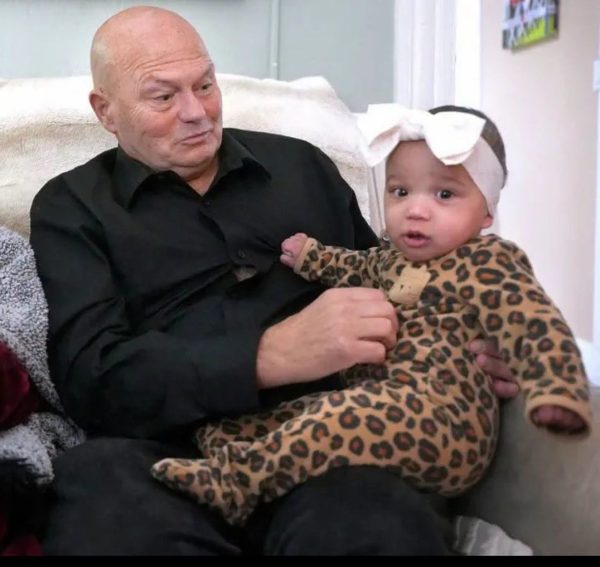
Ken doted on his children.  I would occasionally see him on FB, puffed up with parental pride at son Alex’s soccer prowess, son Rusian’s quips, how everyone loved his little girl Vera.  Then, last month, I read the awful news.  Ken and Kathy had, in Ken’s own words, joined “the world’s worst club.”  Vera, mother of their seven-month-old granddaughter Faith, had Glioblastoma, an aggressive, inoperable, incurable brain cancer; she was dead in October, age 27.

While spending time in the Dominican Republic in her early twenties, Vera had met and married Argenis Romero. When she became pregnant, she decided it was prudent to return to the US.  She wanted Faith to have all the advantages growing up in the US had given her. Argenis planned to join her as soon as he could get a Visa. They did not expect it to take very long.  After all, it was the DR, original home to so many Americans.  Besides, he had a wife and daughter who were US citizens, a loving family waiting to welcome him back, and good prospects for a bright future. 

The visa never came.

Soon after the baby’s birth, Vera was diagnosed.  Argenis stepped up his efforts to get to her and little Faith. The US government stepped up its efforts to keep him away.

Today, Vera has been gone for nearly two months.  Argenis continues to wait. He has yet to meet his daughter.  Ken and Kathy are parenting the little girl, but they know that Faith needs her daddy.

The US Government is moving incredibly slowly..  For reasons no one comprehends, the visa remains a golden ticket they can’t seem to get their hands on. 

Surely there must be someone out there – someone with some clout, some influence, some something who can help bring this family their happy moment, their renewal, their DUE.

Ken Mathews, now retired, was the mathematics supervisor for New Haven Public schools; he, his wife Kathy, and their granddaughter Faith are waiting patiently in Milford for Faith’s father Argenis Romero to arrive from the D.R. Their story is featured in a November 2026 report by New Haven Register journalist Brian Zahn on CT Insider and in a story in the New Haven Register as well.

Finding Grace Among the Ashes

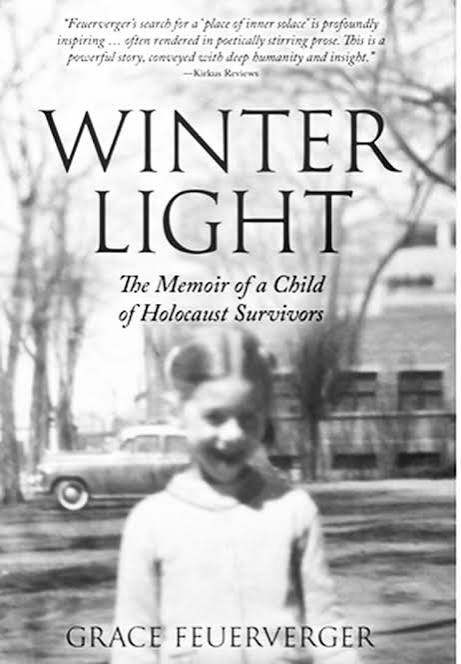
Grace Feuerverger was a survivor before she was born.  Her riveting memoir Winter Light is the chronicle of the miracle of a life she forged for herself out of the ashes of her inherited trauma.

Years before her birth, both Feuerverger’s parents underwent unspeakable horror in a Nazi concentration camp, from which they emerged layered in unacknowledged psychic stresses they tried to bury in the new life they sought to build in Montreal and their three children.  The middle child, born a few years after the brother  delivered in the immediate aftermath of the Holocaust, and fewer years before doted-upon little sister, Feuerverger always felt like the family interloper.  She was the target of mother’s anger, an anger from which her father was incapable of protecting her.  She might have succumbed to a sense of displacement, of despairing disbelief in her own self-worth, but her friendship with a Montreal neighbor provided the window through which she was able to escape.

Feuerverger formed a deep friendship with a local girl, whose loving, close-knit family provided respite from the swirling chaos of abuse and melancholy that dominated her own. They became a kind of surrogate family, a French Canadian working class family with a bright, nonjudgmental outlook, and introduced her to vast worlds beyond the claustrophobic pain of her parents’ home.

It was, however, Feuerverger’s own astute intelligence, her facility with language, and  her remarkable curiosity about all kinds of cultures and people that actually gave her the key to her own salvation., Out of her fascination with the wonders she encountered in her new friend’s life – from French language to Christian premises to food to global perspectives – she found her own future that led her to McGill University and from there to places she had hardly dreamed of reaching.  Further studies in Toronto, at Berkeley, in Perugia, Italy, in Jerusalem, and in a small Palestinian and Jewish village in Israel led to her becoming a linguist, a professor, an expert in conflict resolution, and a member of the Canadian Commission for UNESCO. 

Most poignantly, by escaping her the prison of her parents’ psychoses, she was able to find a deep, rewarding love shared with a man who recognizes her strengths, applauds her successes, and knows better than to seek to save her.  To come out of a childhood where love was repaid with recrimination and to find her way into a career of giving and conciliating, to find the ability to love and be loved by husband, students, family with equal generosity and gratitude . . . those are achievements from which we should all take inspiration!

Scam, Bam, Thank You Ma’am

I have always admired NY police. When my 60s-era peers were shouting “Off the pig,” I was saying Thank you to the officers with whom I had encounters.  One lovely transit policeman saved me from a potentially dangerous (and embarrassing) choice my 18-year-old brain let me make; another gave his own pocket cash to the daughter of a friend of mine, whose apartment had been robbed by thieves who emptied the child’s piggy bank.  Living in NY as a young woman, then again as a middle-aged and an old one, I have never had disdain for my protectors, and I would support no legislation or mayoral proclamation that defunds them in any way.  I have great respect for what they do, what they are. And gratitude.

Which makes me all the more resentful of the details in the story I am about to share. 

Twice in the past week, I have been subjected to police actions that seem terribly disrespectful to the people who wear the uniforms  and that simultaneously scam the citizens who depend on them.

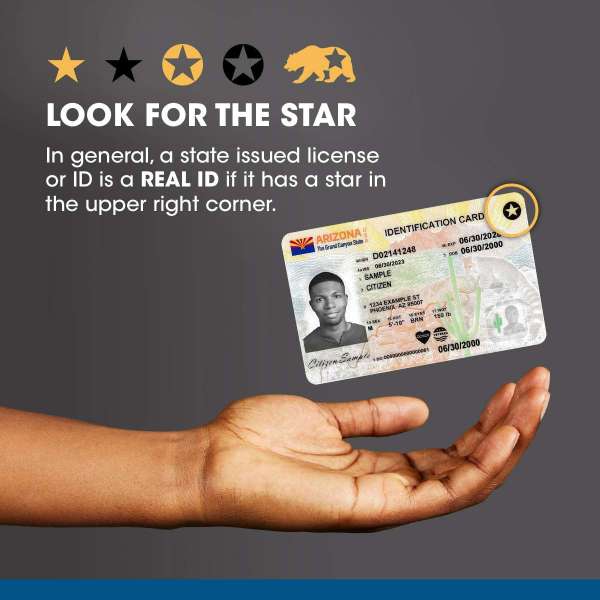
The first incident was essentially a result of my own benign neglect.  A frequent international traveler, I haven’t flown domestically in years.  I did read somewhere about REAL ID, but I didn’t absorb it.  I have a hologram on my driver’s license, and I figured that made it real enough.  So, last week, as I prepared to fly to Iowa for a film festival, I opted to leave my passport at home; I figured my spiffy NY State Driver’s license would stand me in good stead.

How wrong I was. 

At the gate, of course, the agent barred me from the entrance to the TSA/Gate portal.  I felt stupid enough I didn’t cry or get angry, just asked if I should head back to Harlem to get my passport and reschedule my flight.

“Oh no,” replied the sweet young woman in her most authorial voice.  “Go to that kiosk over there, and you can pay the fine.”

What followed was a process of attempts and failures to make the process simple, but in the end, my spending $60.00 was the antidote.  My identification was not changed.  No one asked me for further proof that I am not a robot. My cash was all they needed to authenticate that I am a Bonafide American and not a dangerous terrorist.  The trained law enforcement people who would have arrested me had I tried to barrel my way forward stood helplessly by sweetly encouraging me to put money in the bloated kitty.  Their time, their expertise, their intelligence squandered for sake of a collection plate.

Three days later, driving on Route 87 toward Manhattan from a medical appointment in Westchester, as I crossed the border into the Bronx, the traffic came to a dead halt.  After a few minutes, the reason for the tie-up became clear.  There were, at the side of the road, at least a hundred NY State and City policemen and women directing multitudes of cars off to a  barricaded side of the road.  Much to my consternation, three officers directed me to take my place behind a line of designated cars.

My mind was racing. What could this be? What could they be looking for?  When I was 18, I couriered some weed from Long Island to Manhattan for my cousin , and that was absolutely the last time I had nay contraband on my person.  Oh, I thought, I know. . . .  A dangerous killer had recently escaped from a Tennessee prison; maybe they are stopping cars that look like mine . . . . Oh, wait, or maybe he’s got an old moll as his beard, and they’re looking for her. . . ?

Nope.  Turned out, unbeknownst to me, a year or so ago, when I was switching insurance, there was a 20-day lapse in my coverage.  No one told me.  Geico never sent me a bill.  They reported the lapse to the DMV.  Then, rather than send me a notice ordering me to pay the penalty, the DMV opted instead to leave me in the dark. 

Until the end of the month, when they could stop me and demand that I surrender my car.

The officer was neither harsh nor sympathetic at first.  He simply said, “Your registration is suspended for 20 days.”

“Oh,” I said stupidly. “I guess it stays in its parking spot till the state clears me?”

“No, maam.  We’ll be taking your car.”

“What?  What do you mean? How will I get home ”

“Well, Maam, you will have to figure that out.”

I normally eschew crying as a reaction to what I deem injustice.  But I was aware that cursing and unleashing my inner Rebecca Welton boss ass bitch might not be the smartest move. So I let the tears tumble forth. 

“Please, sir,” I pleaded.  “I need this car.  I cannot get to my job without it, and I depend on my job to support myself. . . “

I could see he was reluctantly softening.

“I really can’t help that, Maam,” he said, this time more softly, almost apologetically.  “I have to take your registration and your car.”

“You mean to tell me that you will put an 80-year-old woman out on the highway, where it is illegal to call an Uber, where there is no exit nearby, and expect . . . . “

Now the officer caught himself.  I could see he did not want to be that guy.  He completely rewound his demeanor and spent the next half hour helping my daughter figure out how to pay the fine online.  Another policeman who was with him told me repeatedly that the helpful man was violating protocol; he implied that the helpfulness could get the officer in trouble.  But in the end, thanks to the fact that he gave us a suspension number and a violation number, I was able to make the payment required online by way of my phone. 

Once again, a simple payment and the sentence was commuted.  That officer, probably a leader in his squad, a brilliant graduate of his academy, had officially wasted his time giving contraband information to an old woman, information the state should have sent to her so she could pay online.  Elsewhere on the highway were real criminals, real speed monsters and intoxicated drivers not being caught.  While an 80-year-old woman was detained for a pittance of a penalty.  Such disrespect for the uniform. 

Our administrators advocate barring the police from doing the work they are trained to do, but they make hundreds of them stand on the dangerous highway, breathing in fumes and abusing helpless idiots like me, directing them to make payments to the state, payments that will not increase their paychecks or improve their lives. 

Your tax dollars at work!